Identity Verification Solutions

Identity Verification Software to Confirm Your Customers

Request a Demo
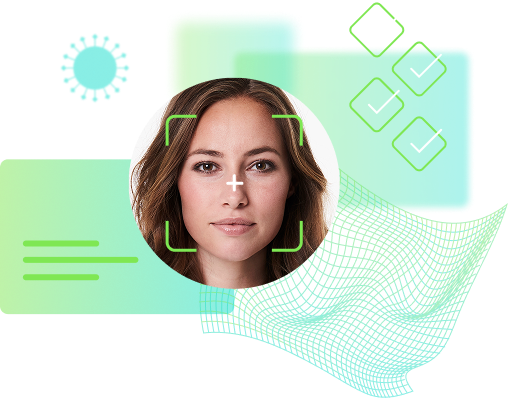

Identity verification is how a business confirms a new customer is who they say they are. Jumio automates this process using AI to evaluate an ID check, a selfie with liveness detection, and a risk-based decision to stop fraud and meet KYC and AML compliance.

What is identity verification?

Identity verification is the process of confirming a person is who they claim to be before you give them access to an account, product, or service. Done online, it matches a real person to trusted evidence, typically a government-issued ID and a live selfie, replacing the need for an in-person ID check.

Identity verification combines document, biometric, and risk signals into a single decision rather than relying on one check. That layered assurance is what makes fraud prevention, KYC and AML compliance, and safe digital onboarding possible.

The term is often confused with two narrower, related checks. ID verification confirms only that a government-issued identity document is authentic, while document verification covers supporting documents like proof of address or bank statements. Identity verification combines these and more into a single decision about the person.

How identity verification works

Verify the ID’s authenticity

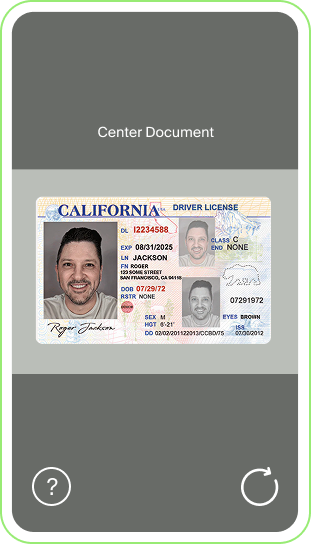
The customer photographs their government-issued ID. Jumio confirms the document is authentic and unaltered. (Learn more on our ID Verification page.)

1

Verify the person is present and living

The customer takes a selfie. A liveness check confirms they're physically present and a real person, then matches their face to the photo on the ID.

2

Make a risk-based decision

Jumio quickly assesses identity risk so businesses can make decisions based on their own risk tolerance, so genuine customers get through and fraud gets stopped.

3
Try Our Demo App
how it works graphic showing phone screen with CA ID
Upload Successful on phone screen. Risk score bar at the bottom showing low to high risk.

How identity verification works

Verify the ID’s authenticity

The customer photographs their government-issued ID. Jumio confirms the document is authentic and unaltered. (Learn more on our ID Verification page.)

1
how it works graphic showing phone screen with CA ID

Verify the person is present and living

The customer takes a selfie. A liveness check confirms they're physically present and a real person, then matches their face to the photo on the ID.

2

Make a risk-based decision

Jumio quickly assesses identity risk so businesses can make decisions based on their own risk tolerance, so genuine customers get through and fraud gets stopped.

3
Upload Successful on phone screen. Risk score bar at the bottom showing low to high risk.

Methods of identity verification

There are three main methods of identity verification. Strong solutions combine them rather than relying on just one, which is how Jumio reaches a confident decision while keeping onboarding fast.

Document verification

Confirms a government-issued ID, such as a driver’s license or passport, is authentic and unaltered. See ID Verification and Doc Proof.

Biometric idenatity verification

Matches a live selfie to the photo on the ID, with a liveness check confirming a real, present person rather than a photo or deepfake. See Selfie Verification and Liveness Detection.

Database and data checks

Cross-references the person’s details against authoritative and watchlist sources to confirm the identity exists and flag risk.

Identity verification for KYC and AML compliance

For regulated businesses, identity verification is the first step toward compliance. Know Your Customer (KYC) rules require you to confirm who your customers are at onboarding, and Anti-Money Laundering (AML) rules require you to screen them and monitor for risk. Identity verification provides the proof that a customer is real and genuinely present, which is the foundation both depend on.

Jumio helps you meet these obligations under frameworks like KYC, AML, and GDPR, and adapts as requirements change across regions. By automating verification, you satisfy regulators while keeping onboarding fast for legitimate customers.
Ready to see how Jumio can help you build digital trust?

Solution Highlights

Global Coverage

Verify customers worldwide, with support for a broad range of government-issued IDs across countries and languages.

Liveness Detection

A brief, face-based liveness check confirms a real, present person and protects against spoofs and deepfakes, while deterring scammers who won't share their own likeness.

User Experience

Dramatically reduce user friction and verification time while increasing conversion rates.

Course Correction

Reduce abandonment rates by enabling your users to retake a picture of their ID or selfie if the initial image is unreadable.

Compliance

Comply with KYC, AML, CCPA, GDPR and many more privacy and financial services regulations and directives.

Security

All data is transmitted and stored with strong AES 256-bit encryption. Jumio is PCI-DSS Level 1 compliant.
GAMING
By adding Jumio into the customer verification process, we are making life quicker and easier for our customers, minimising fall-out from lengthy verification processes and removing costly man hours where we have to receive and review documents manually."
Phillip Rivers, Head of Registrations, Payments and Fraud, Betfair

FAQs

Generally, users can use the same documents for digital identity verification that they would use to verify their identity in person. Some of the most common ID document verifications include:
  • Driver’s License
  • Passport or Passport Card
  • State ID Card
  • Permanent Resident Card

Identity verification is a key part of the account opening process and is commonly used by financial institutions to mitigate fraud risks. It can also be used to prevent minors from accessing age-restricted products. Furthermore, any company that wants to protect sensitive user data, including healthcare records and social media accounts, can use identity verification for both onboarding and for biometric authentication of returning users.

Most identity verification checks finish in seconds. The customer photographs their ID and takes a selfie, and Jumio quickly assesses identity risk so businesses can make decisions based on their own risk tolerance.

It confirms the ID document is authentic, verifying that the person presenting it is real and physically present, and ensuring they match the photo on the ID. Advanced liveness detection helps defend against stolen photos, spoofing and deepfakes, while additional risk signals help identify suspicious activity before an account is opened. Beyond onboarding, ongoing analysis can uncover connections and emerging risks across identities and transactions, helping businesses detect fraud as it evolves.

Yes, identity verification can be completed remotely. The entire process happens online on the customer's own phone or computer, with no branch visit or special hardware required. This is what lets businesses onboard customers from anywhere.

It's time for a more intelligent, connected, and compliant approach to identity.

Get Started