In today’s digital world, trust is everything. Yet the ways we establish trust online haven’t kept pace with how rapidly the threat landscape is changing. For years, identity verification has been the foundation of digital trust, a quick check to confirm that someone is who they claim to be at a single point in time.
But here’s the reality: fraud doesn’t happen in a single moment. It evolves, adapts, and spreads across transactions, devices, and accounts. Point-in-time verification alone isn’t enough to stop it. Meanwhile, your users demand seamless experiences. They want to be trusted instantly, without jumping through verification hoops at every step.
That’s why the market needs a new approach to trust. One that goes beyond isolated checks and builds a continuous, contextual, intelligent understanding of identity. This is identity intelligence.
What is Identity Intelligence?
Identity intelligence is the future of digital trust. It doesn’t just verify identities; it understands them in ways never before possible. Rather than simply checking who someone is at onboarding or monitoring them over time, it creates a dynamic, connected, and intelligent view of an identity as a whole. Identity intelligence also provides a comprehensive view of user behavior and risk factors, enabling organizations to better assess and manage threats.
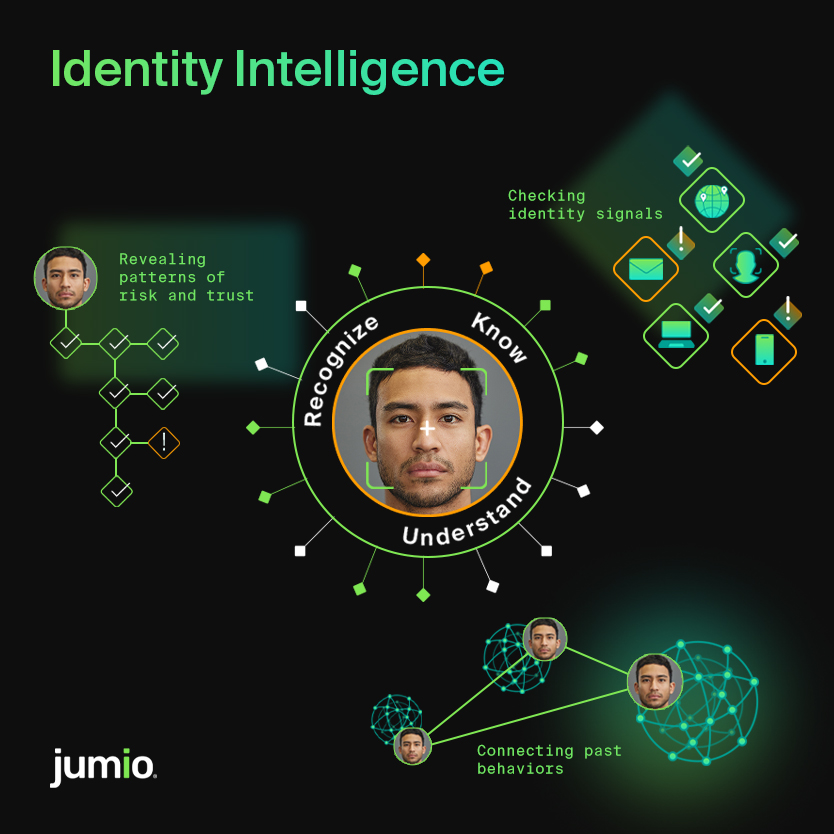
In simple terms, it means:
- Knowing who someone truly is by bringing together signals from across different sources, not just within your own business
- Understanding how they behave over time, across sessions, devices, and even with other businesses within the same network
- Recognizing emerging patterns that reveal risk or trustworthiness before fraud can occur
- Achieving full visibility into user activity and identity-related data across platforms to ensure security and compliance
Identity intelligence transforms fragmented data points into a living, adaptive profile that tells you if a person is legitimate, if they exist in the real world, and, most importantly, if they are trustworthy – not just today, but in every moment and transaction that follows. By streamlining trust decisions and reducing manual review, identity intelligence enhances operational efficiency, helping organizations balance security with user experience.
Why Now?
The threats businesses face today are unlike anything we’ve seen before. Fraudsters use AI-generated deepfakes, synthetic identities, and coordinated attacks that bypass traditional defenses. Meanwhile, users expect faster, frictionless digital experiences without compromising their privacy or security. As the threat landscape continues to change, organizations must recognize the challenge of evolving threats and the constant emergence of new threats that require ongoing vigilance and adaptation.
We need an approach that is as dynamic and intelligent as the world we operate in. To stay ahead of cybercriminals, it is crucial to continuously update security strategies and leverage identity intelligence that adapts to new and evolving threats.
How Jumio is Leading This Shift in Digital Identity
Jumio pioneered the ID + selfie approach that set the standard for identity verification. But the world has changed, and so have we. That’s why we’re evolving beyond verification to deliver identity intelligence and empowering businesses with the most advanced platform for establishing digital trust. Our approach combines:
- Connected data across tens of millions (and growing) legitimate and fraudulent identities in the Jumio Identity Graph
- Advanced biometrics that confirm presence and enable instant recognition of returning users
- AI-driven analysis that detects fraud signals in real time and powers dynamic risk decisions
- Cross-transaction risk analysis that spots patterns across users, devices, and sessions to stop fraud before it impacts your business
- Machine learning for advanced analytics and predictive modeling, enabling automation, anomaly detection, and future threat prediction
What sets Jumio apart is our privacy-first approach built on explicit end-user consent to leverage both legitimate and fraudulent identity data in our identity graph. With permission from individuals, and a strong focus on compliance, Jumio is able to learn from identity interactions across our platform to help customers recognize trusted users faster, detect fraud earlier, and make confident, defensible decisions. This means your business gains insights no other identity provider can offer.
This isn’t just an incremental upgrade; it’s a fundamental shift from simply verifying identities to continuously understanding them with intelligence, context, and connection.
Identity & Access Management (IAM) Strategies
Identity & access management is the connective tissue that links user identities to the resources and sensitive data they need—while keeping potential threats at bay. In an era where digital identities are constantly targeted by threat actors, robust access management strategies are essential for protecting sensitive information and maintaining digital trust.
Effective access management goes beyond simply granting or denying entry. It’s about ensuring that only the right individuals have the right level of access to the right resources, at the right time. This approach minimizes the attack surface and helps prevent identity theft, privilege escalation, and unauthorized exposure of sensitive data.
Identity intelligence plays a pivotal role in modern access management. By leveraging deep insights from behavioral data, compromised credentials, and real-time risk signals, organizations can detect anomalies and suspicious activity before they escalate into breaches. This proactive approach allows security teams to identify weaknesses in access controls, automate password resets for high-risk accounts, and enforce step-up authentication when potential risks are detected.
What This Means for You
For businesses, identity intelligence delivers:
- Stronger fraud prevention: Detect coordinated and emerging threats before they cause damage
- Faster, frictionless experiences: Instantly recognize trusted users and reduce unnecessary barriers
- Future-ready trust frameworks: Adapt dynamically as regulations tighten and fraud tactics evolve
- Identity theft protection: Enhance security measures to prevent account takeovers and safeguard customer identities
- Operational efficiency: Streamline processes, reduce manual intervention, and balance security with user experience
For users, it means a safer, smoother digital journey where they are recognized and trusted without repeatedly proving who they are.
Additionally, identity intelligence is allowing businesses to scale securely, process high transaction volumes, and provide seamless user experiences through real-time threat detection
The Future We’re Building Against Evolving Threats
At Jumio, we believe the future of digital trust lies in identity intelligence. A future where verifying identity isn’t a one-time event, but an ongoing, adaptive understanding. Where businesses can make faster, smarter decisions and users can move through the digital world with assurance.
We invite you to join us on this journey as we build a smarter, safer digital world together.
Because trust shouldn’t be a hurdle. It should be an enabler.